It took ten years and was settled by a memo about batteries
Steve Jobs Published 'Thoughts on Flash' on 29 April 2010 and Framed the Argument for Everyone Who Followed
Apple's CEO put six objections into the public record. Some were engineering. Some were business. All of them stuck.
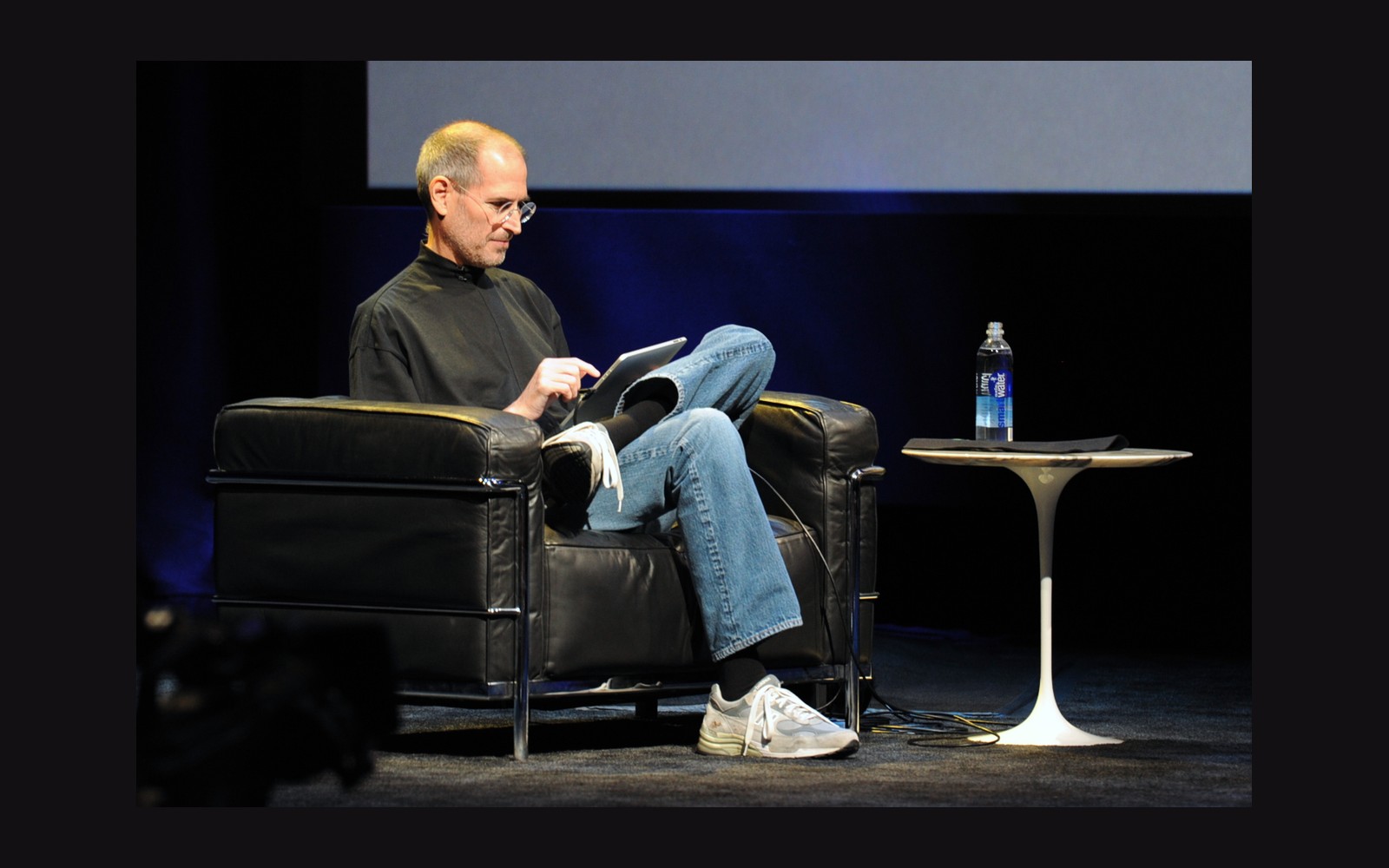
The Letter and Its Context
By April 2010 the dispute between Apple and Adobe had been building for years in private. Apple had shipped the original iPhone in 2007 without Flash support, citing performance and stability concerns; Adobe had spent the following three years negotiating, lobbying and, eventually, demonstrating mobile Flash builds that Apple declined to certify. When Steve Jobs published "Thoughts on Flash" on Apple's website on 29 April 2010, the subtext of that long argument was suddenly public property. The letter was unusual for a CEO of a publicly traded technology company: it named a competitor's product directly, made technical claims with authority, and invited developers and journalists to treat those claims as settled. The Flash community, web-standards advocates, and Adobe's own executives were forced to respond on ground Jobs had chosen.

The letter's opening salvo positioned Adobe's Flash as the past and HTML5 as the future — a framing that felt premature in 2010 but proved largely accurate by 2017. What makes the document worth close reading now is not whether Jobs was right in aggregate, but which of his six specific objections survived contact with the technical record, and which were better understood as competitive positioning.
The Six Objections, Examined
Openness. Jobs argued that Flash was a proprietary platform controlled by a single company, whereas HTML5, CSS and JavaScript were open standards. This was technically accurate in its narrow sense: the SWF format and the Flash Player runtime were Adobe property. Adobe had published the SWF specification and had contributed the AVM2 virtual machine to Mozilla as the Tamarin project in 2006, but neither move transferred control of the player itself. Flash on any platform ran on Adobe's schedule and Adobe's terms. The HTML5 alternative Jobs endorsed was, by contrast, a genuinely multi-stakeholder standard developed through the W3C and WHATWG processes. On this point Jobs was correct, even if the contrast he drew between total openness and total closure was somewhat cleaner than reality warranted.
Security, performance and reliability. Jobs cited Adobe Flash as the leading cause of Mac crashes and described it as having serious security vulnerabilities. Adobe disputed both characterisations. The crash data Jobs referenced came from an Apple internal metric that Adobe could not independently audit. On security, the record was more complex: Flash Player was a frequent target in the vulnerability databases of the period, but so were competing runtimes including QuickTime and Java. Saying Flash had serious security problems was not wrong; saying it was uniquely dangerous was harder to establish. On mobile battery life and GPU performance, Jobs was on solid technical ground — mobile Flash builds did draw significantly more power than native equivalents, a consequence of relying on software rendering rather than the mobile GPU pipelines that hardware vendors had optimised for their own codecs.
Key dates
- 2007iPhone launches without Flash support
- 29 April 2010"Thoughts on Flash" published on apple.com
- 2013Kevin Lynch, Adobe's former CTO and Flash advocate, joins Apple
- 25 July 2017Adobe announces Flash Player end-of-life
Touch. Jobs's third objection was that Flash was built around a mouse and cursor model that did not translate to a touch interface. Most existing Flash content used hover states — interactive responses triggered by moving a cursor over an element — which have no obvious equivalent in a tap paradigm. This was a genuine technical problem, not a rhetorical one. Adobe's response was that developers could redesign their Flash content for touch; Jobs's implicit counter was that the installed library of existing Flash content, which was what users actually wanted on their phones, could not be redesigned retroactively. On that narrower point, he was right.
Also in The Argument
Chrome's Click-to-Play Default in 2015 Was Quieter Than Jobs's Letter and More Final
Adobe Set the Date on 25 July 2017 and Named the Partners Who Asked Them To
Third-party development layers. The fourth objection was more explicitly business-driven. Jobs argued that if developers built applications using Flash's ActionScript toolchain and then compiled them to native iOS apps — Adobe had just released tools enabling exactly this workflow — then Apple would receive suboptimal applications and Adobe would sit between Apple and its developers. The concern about application quality was partly engineering and partly competitive: Adobe's cross-compiler produced working applications, but they were not always well-optimised. Apple's SDK terms at the time prohibited the use of non-Apple-approved compilers, a restriction it later relaxed. This objection was the least defensible on purely technical grounds and the most transparent as a business argument.
Saying Flash had serious security problems was not wrong; saying it was uniquely dangerous was harder to establish.
Battery life. Already addressed under performance, but Jobs gave it a separate section because it applied specifically to video. Flash encoded video using the H.264 codec, but delivered it through a software Flash player that bypassed the hardware H.264 decoding present in iOS chips. The consequence was measurably higher power draw. HTML5 video delivered via the <video> tag could use hardware decoding directly. This claim was independently verifiable, and Adobe did not seriously contest it.
The most important reason. Jobs saved his most sweeping argument for last: he wanted developers to build for the next generation of computing rather than the existing one. This was the least technical and most philosophical section of the letter, and it functioned as a restatement of the openness argument at a higher level of abstraction. Flash represented a bet on a particular architecture of the web — plug-in-mediated, single-vendor runtime — that Jobs was betting against. This was genuinely a prediction about the future dressed as a statement of principle, and by the time Adobe announced Flash Player's end-of-life on 25 July 2017, the prediction had proved correct.
Where this sits
Steve Jobs's 2010 open letter, Chrome's NPAPI removal, Adobe's 2017 announcement, and the plug-in's death on 12 January 2021.
The six objections at a glance
| Openness | Flash proprietary; HTML5 open standards. Technically accurate in substance. |
| Security and reliability | Flash cited as leading cause of Mac crashes; security record mixed compared to competing runtimes. Partially accurate, partially contested. |
| Touch | hover-state architecture incompatible with tap interfaces. Technically valid; Adobe's rebuttal required retroactive redesign of existing content. |
| Third-party development layer | cross-compilation inserts Adobe between Apple and its developers. Primarily a business/competitive argument; Apple later relaxed the SDK rule it used to enforce this. |
| Battery life | software-decoded Flash video bypasses hardware H.264 decoding in iOS silicon. Independently verifiable; Adobe did not contest in substance. |
| The next generation | Flash as past, HTML5 as future. A prediction presented as principle; subsequently validated by the 2017 end-of-life announcement. |
How the Letter Shaped the Debate
Adobe's public response came from its CEO Shantanu Narayen and CTO Kevin Lynch, and from individual engineers on the Flash team who posted detailed rebuttals of the crash-data and security claims. Lynch, who was Adobe's CTO at the time and became an Apple employee in 2013, described the openness characterisation as one-sided. The engineering rebuttals had merit but struggled to gain traction, partly because Jobs's letter was extremely well-written and structured — it gave journalists a numbered list and a clear villain — and partly because the underlying migration to HTML5 was already underway and gave Jobs's conclusion an air of inevitability.
The letter's lasting effect was terminological and rhetorical. It established "open versus closed" as the primary frame through which browser plugin debates would be conducted for the rest of the decade. It made battery life and security the canonical objections to Flash, which shaped the coverage of every subsequent Chrome policy decision — including Chrome's click-to-play default in 2015 — regardless of whether those decisions cited Jobs explicitly. And it gave the hundreds of thousands of Flash game and animation developers who had built careers on the platform no rebuttal at all, because the letter was not addressed to them. It was addressed to "customers," by which Jobs meant iPhone buyers. The creative ecosystem that had grown up around Newgrounds, Kongregate, and the broader portal economy was not part of Jobs's argument; it simply was not in his frame.
Whether "Thoughts on Flash" accelerated the platform's decline or merely announced what was already inevitable is a question historians of the web will argue over. What is clear is that it gave the decline a date, a vocabulary, and a named author — and that every subsequent technical, regulatory and business decision about Flash's sunset took place in the rhetorical space Jobs built on 29 April 2010.