Somebody made these, and you can still say their names
Adam Saltsman Made Canabalt in Five Days for a Game Jam in 2009
A single button, a rooftop chase, and five days of work that named a genre.
The Jam, the Constraint, the Game
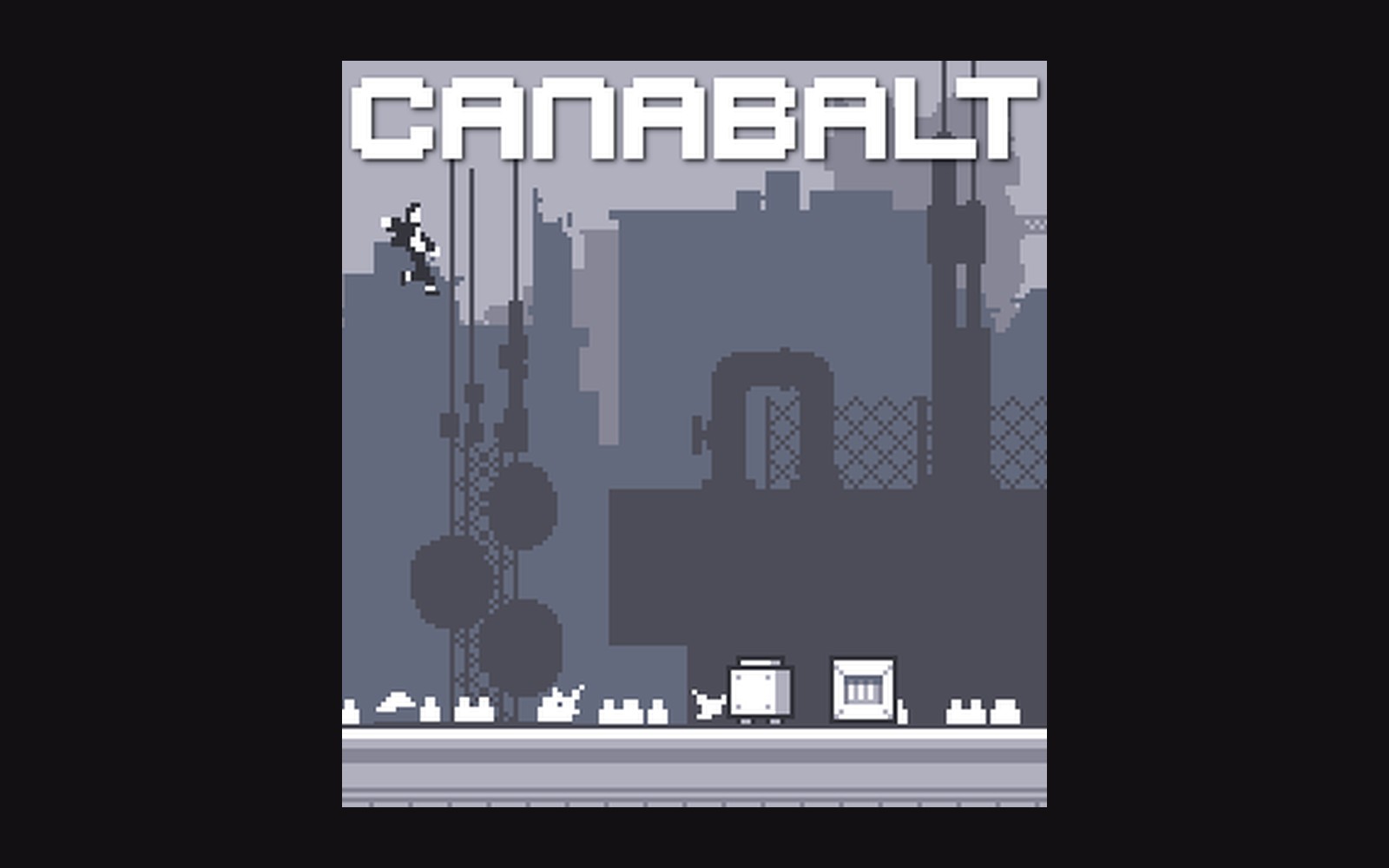
In September 2009, the Experimental Gameplay Project ran a monthly theme — "Bare Minimum" — asking participants to strip their designs to the smallest possible interactive core. Adam Saltsman, a developer then based in Austin, Texas, responded with Canabalt: a side-scrolling game controlled entirely by a single keypress. The player's character sprints across a crumbling city skyline autonomously; the only decision available is when to jump. Everything else — speed, obstacle placement, the moment a window shatters or a rooftop gives way — runs without input. Saltsman completed a playable version in roughly five days.

The game was built in Flash using Saltsman's own open-source framework, Flixel, which he had developed and released earlier that year. Flixel gave developers a lightweight ActionScript 3 foundation for pixel-art games, handling sprites, collision and camera without requiring Flash's timeline-based authoring workflow. Canabalt ran as a SWF file embedded in a web page, with a monochrome grey palette broken only by the silhouetted skyline and the occasional flock of birds — details Saltsman has described in documented post-mortems as deliberately atmospheric rather than decorative. The audio, composed by Danny Baranowsky, contributed a propulsive, looping score that amplified the game's core tension without additional mechanics to hold attention.

From Browser to Genre
Canabalt spread quickly after its release in September 2009, carried in part by gaming blogs and the low friction of Flash distribution. Saltsman released the source code publicly, a decision that had tangible downstream effects: the codebase became a reference implementation studied by other developers, and Flixel's subsequent community expanded around it. Indie Royale and similar bundles later included Canabalt ports, and in 2010 Saltsman released a version for iOS through Semi Secret Software, the small studio he co-founded. That port introduced the game to a much larger audience at a moment when mobile gaming was establishing its own conventions.
Also in The Works
Alien Hominid Started on Newgrounds in 2002 and Shipped on Three Consoles Two Years Later
Jakub Dvořský Made Machinarium in Flash and It Won an IGF Grand Prize
The phrase "endless runner" did not originate with Canabalt, but the game is routinely cited as the design that clarified and popularised the form — one procedurally varied environment, escalating speed, and a single-input control scheme stripped of any secondary verbs. Temple Run, released in 2011, brought the structure to three dimensions and tens of millions of downloads; its designers have pointed to single-button runners as a structural influence. Saltsman's five-day constraint, born from a jam theme about reduction, produced a template that proved more durable than most games built with months of development time.