Somebody made these, and you can still say their names
Line Rider Was Made in Two Days by a Slovenian Student in 2006 and Then It Was Everywhere
A physics toy built in a weekend became one of the most-watched Flash objects on early YouTube.
The Tool and What Happened Next
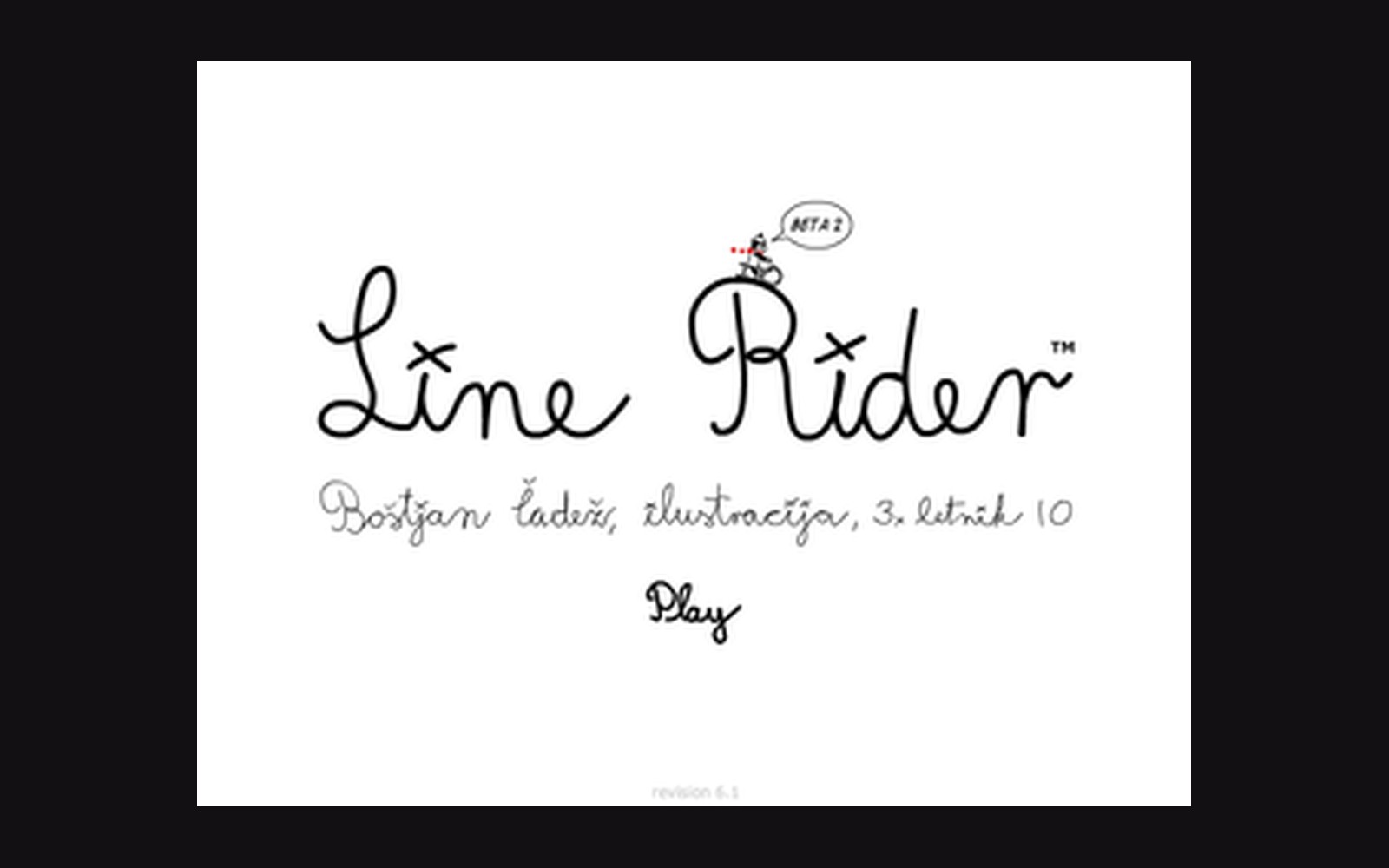
Boštjan Čadež, then a student at the University of Ljubljana, built Line Rider in 2006 as a coursework project completed over roughly two days. The premise was almost aggressively simple: draw a line, press play, watch a small figure on a sled ride it. There were no goals, no score, no failure state. The SWF was posted to deviantART in September 2006, and the internet immediately treated it as a physics sandbox.

The spread was fast and platform-specific. Early YouTube — still less than two years old — turned out to be the ideal distribution mechanism for Line Rider, because the interesting output of the tool was not the tool itself but recordings of elaborate tracks. Users built synchronised runs set to classical music, engineered loop structures that should not have worked, and constructed tracks lasting several minutes across intricately hand-drawn terrain. These videos accumulated millions of views at a moment when that figure still meant something unusual.
The commercial response arrived quickly. InXile Entertainment licensed the property and released packaged versions for Nintendo DS and Wii in 2008, transforming a free student experiment into a retail product. A PC version, Line Rider 2: Unbound, followed. Čadež was credited as the original creator across these releases, but the community that had built the tool's reputation had done so entirely within the original, unmonetised Flash version.
Also in The Works
Alien Hominid Started on Newgrounds in 2002 and Shipped on Three Consoles Two Years Later
Jakub Dvořský Made Machinarium in Flash and It Won an IGF Grand Prize
What Line Rider exposed was the gap between a tool's mechanical simplicity and its expressive ceiling. The interface asked only that users draw; the community answered with compositions that required precise knowledge of the physics engine — how the sled weighted turns, how speed accumulated on descending grades, where the rider would fall. The authoring tool was the game, and the audience was the judge.
The original Flash SWF remains one of the more complete examples of what the Flashpoint project preserves: content whose value was defined entirely outside any portal, sponsorship arrangement, or commercial context.